

THE BEST METHODOLOGIES IN THE MARKETMethodologiesOur top tech talent utilizes industry-standard software development methodologies to deliver robust end-to-end solutions.
Design Thinking

Design Thinking is a human-centered approach to innovation and problem-solving. It encourages empathy, ideation, and experimentation to create user-focused solutions. Everything we do follows this guiding principle.

Here are some of the ways we help our healthcare clients.
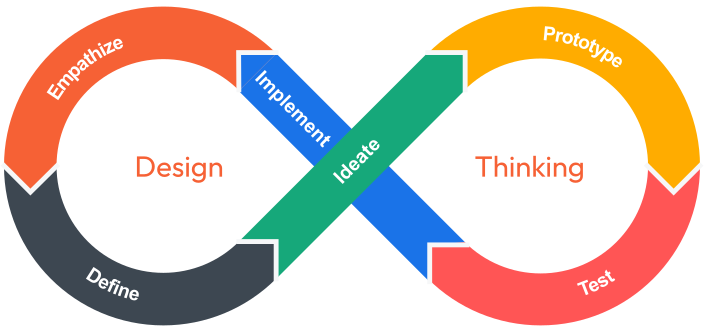
The Process
1. Empathy
Conduct user research to gather valuable insights into end-user needs and pain points.
2. Definition
Clearly define the problem based on the insights collected during the first phase.
3. Ideation
Brainstorm creative solutions and encourage divergent thinking to explore multiple possibilities.
4. Prototyping
Develop a tangible or visual representation of the solution to test its functionality and effectiveness.
5. Testing
Test the prototype with users to collect feedback and learn about its strengths and weaknesses.
6. Iteration
Based on feedback, iterate and refine the solution to improve its effectiveness and alignment with user needs.
Best Practices We Implement
User focusConduct user research to deeply understand their needs and pain points.
Iterative developmentDevelop solutions in short cycles, with continuous feedback and incremental improvements.
Collaborative work environmentFoster collaboration among multidisciplinary teams for more innovative solutions.
Rapid prototypingCreate quick prototypes to validate ideas and concepts with end-users.
Agile

Agile is a set of principles for software development that prioritizes customer satisfaction through continuous improvement and iterative progress.

It is ideally used in environments where product requirements can change and evolve over time. Agile is the standard practice in most of our projects.
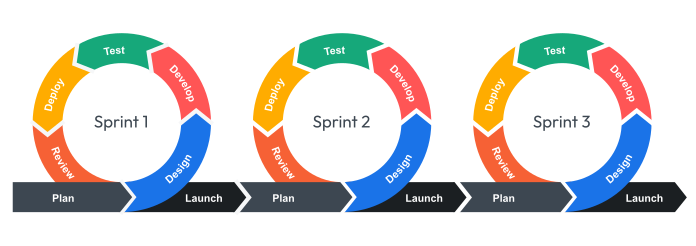
Our Process
1. Requirements gathering
Collect and analyze project requirements, prioritizing them based on value for stakeholders.
2. Iteration planning
Plan the work for the next iteration, breaking requirements down into smaller tasks.
3. Development
Develop features iteratively, encouraging continuous collaboration and feedback.
4. Testing and integration
Implement continuous testing and integration to ensure compatibility and stability of modules.
5. Review and adaptation
Frequently assess project progress, adapting plans based on reviews and feedback.
6. Deployment and feedback
Deliver incremental releases, incorporating feedback loops for continuous improvement.
Best Practices We Implement
Continuous integration and deliveryUse CI/CD pipelines for rapid and reliable releases.
Feedback loopsEstablish regular feedback loops with stakeholders and users.
Automated testingImplement automated tests whenever possible for faster and more reliable test execution.
Test-driven developmentAdopt TDD to ensure robust, bug-free code.
Code modularityEnsure the codebase remains modular and easy to maintain.
Code refactoringRegularly refactor code to improve its structure and readability.
Scrum

Scrum is a flexible and iterative agile framework, ideal for managing complex software and product development using incremental progress through sprints. It is best suited for projects where requirements can change quickly and frequent adaptations are needed. All of our teams are led by a certified Scrum Master and Product Owner.
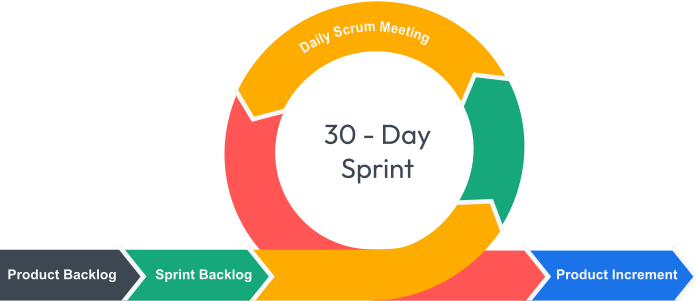
Our Process
1. Product backlog creation
Identify and document project requirements.
2. Sprint planning
Prioritize and select backlog items for the next sprint.
3. Sprint
Execute tasks within timeboxes (usually 2 to 4 weeks).
4. Daily scrum
Hold daily team meetings for alignment and discussing progress and obstacles.
5. Sprint review
Evaluate the result and present it to stakeholders.
6. Sprint retrospective
Reflect on the process and make necessary adjustments for future sprints.
Best Practices We Implement
Continuous IntegrationAutomatically merge and test code changes to maintain quality and consistency.
Automated testingImplement automated tests whenever possible for faster and more reliable test execution.
Modular designBuild software in incremental, manageable units.
Regular reviewsConduct code and design reviews to encourage collaboration and knowledge sharing among team members.
Definition of DoneClearly define what "done" means for each user story, ensuring a shared understanding of completion.
DevOps

DevOps is an "infinite loop" methodology that integrates software development (Dev) and IT operations (Ops) to improve collaboration and productivity. It is used in projects where rapid and continuous delivery is a priority.
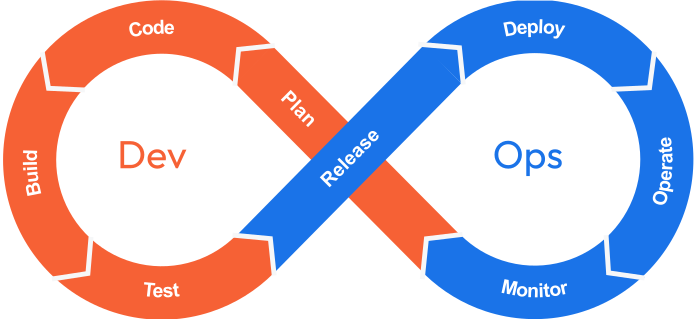
Our Process
1. Planning and collaboration
Collaboratively plan and define project requirements.
2. Code development
Develop code with an emphasis on version control and collaboration.
3. Continuous integration
Automatically build and test code changes.
4. Deployment
Use automated tools for continuous deployments.
5. Monitoring and feedback
Continuously monitor applications and infrastructure in production.
6. Automation and optimization
Continuously automate repetitive tasks and optimize processes.
Best Practices We Implement
Infrastructure as Code (IaC)Manage and provision infrastructure using code, enabling automation, version control, and consistency in deployment and management processes.
Monitoring and loggingImplement monitoring and logging to track system performance and issues.
Continuous Integration/Continuous Deployment (CI/CD)Automate the deployment pipeline to facilitate rapid releases.
Navigate
  • Design Thinking
  • Agile
  • Scrum
  • DevOps

Want to accelerate software development
at your company?
We can help.
duo